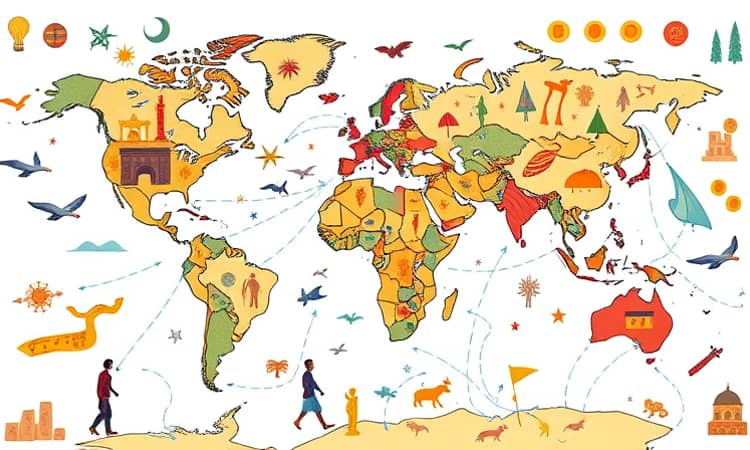
In an era defined by rapid globalization, economies no longer operate in isolation. Instead, they weave through a complex tapestry of trade policies, migration flows, and cultural exchanges. Understanding these interconnections is essential for policymakers, businesses, and communities striving to harness new opportunities while addressing pressing inequalities. This article delves into the multifaceted ways cross-cultural dynamics shape economic landscapes and offers a practical roadmap for inclusive growth.
Global Economic Outlook: Trends and Tensions
The period 2025–2026 presents a mixed picture. Inflation is set to ease from 2.4% in 2024 to 2.1% in 2025, while real GDP growth hovers around 2.4%, decelerating to 1.7% in 2026. The IMF forecasts annual growth of 3.2% for both 2024 and 2025, yet warns that fiscal tightening and tariff pressures will bite harder in 2026.
U.S. tariffs have risen steeply, averaging 25% across partners and generating an estimated $819 billion in potential revenue by 2025. These measures aim to rebalance trade but risk inflating domestic prices and dampening consumer spending. Meanwhile, China’s economy remains centered on state-led and private-sector investment, crowding out household consumption and deepening structural vulnerabilities.
These policy shifts coincide with dramatic trade imbalances: China’s global surplus reached $997 billion in 2024, while the U.S. posted a $1.2 trillion deficit. The widening gap underscores how global trade surplus of unprecedented scale can ripple through domestic economies, influencing everything from jobs to prices.
Migration and Labor: The Human Capital Factor
Migration underpins economic dynamism, yet recent deportation plans threaten to weaken labor markets. Modest deportation increases projected in 2025–2026 could strain sectors like agriculture, construction, and hospitality, slowing workforce expansion and consumer demand.
- Safe, regular, and responsible migration forms the cornerstone of equitable development.
- Migrant remittances are vital lifelines for developing regions, with targets to slash transaction costs below 3% by 2030.
- Immigrants drive innovation: nearly half of Fortune 500 firms trace their origins to founders or descendants born abroad.
Addressing these challenges demands balanced policies that protect jobs while welcoming talent—ensuring that migration remains a net benefit for both sending and receiving countries.
Inequality and Social Determinants of Economic Impact
Inequality threatens to erode social cohesion and stall long-term growth. Even as incomes for the poorest 40% were outpacing national averages before the pandemic, recent crises have reversed progress. One in six people still faces discrimination, with women and persons with disabilities disproportionately affected.
- Income and wealth disparities hamper poverty reduction.
- Lack of access to education and healthcare deepens social divides.
- Discriminatory policies undermine equal opportunity and shared prosperity.
Effective public policy must focus on modifiable determinants—education, housing quality, and social support—to build healthier, more equitable communities.
Cultural Norms and Economic Behavior
Culture, traditions, and social norms play a decisive role in shaping consumption patterns, labor participation, and investment decisions. From local customs affecting savings rates to community support networks influencing entrepreneurship, cultural context cannot be ignored.
One of the most potent tools for bridging cultural divides is design thinking. By adopting a non-linear, iterative process of innovation, teams can uncover hidden needs and develop solutions that resonate across diverse societies.
Cultural tourism, valued at $1.2 trillion in 2025 and projected to exceed $2.6 trillion by 2035, exemplifies how cross-cultural engagement can fuel economic growth while preserving heritage.
Practical Policy Roadmap for Inclusive Growth
- Eradicate extreme poverty and hunger through targeted social protection and food security programs.
- Invest in health, education, and decent jobs, prioritizing youth, migrants, and vulnerable groups.
- Eliminate discriminatory laws and practices to foster inclusive social and economic growth.
- Enhance representation of developing countries in financial institutions to ensure fair decision-making.
- Facilitate orderly, safe, regular, and responsible migration to meet labor market needs.
- Implement special trade treatment for lower-income nations and encourage official development assistance.
As we look beyond borders, the task before us is clear: to transform economic interdependence into shared prosperity. By aligning trade policies, migration frameworks, and cultural insights, societies can forge resilient and inclusive development journeys—creating a world where every community has the opportunity to thrive.