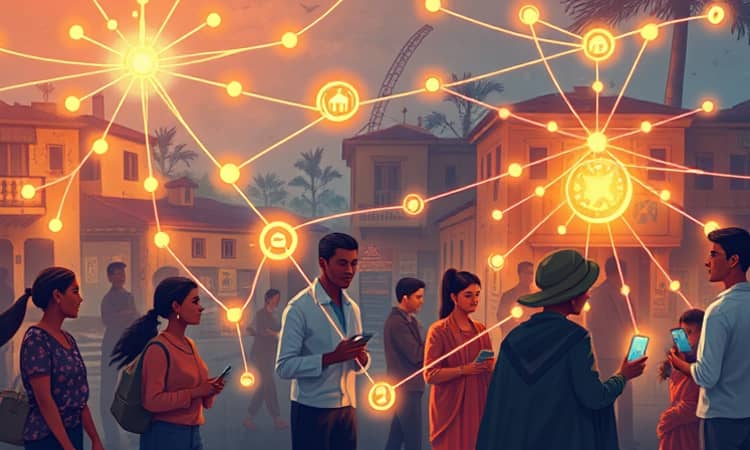
Access to credit remains one of the most transformative forces in the global economy. From empowering entrepreneurs to smoothing household budgets, credit unlocks opportunities that drive growth and resilience. Yet, for millions around the world, the doors to financial services remain firmly closed.
In this article, we embark on a journey to understand the current state of financial inclusion, spotlight the persistent barriers, and celebrate innovations that are reshaping the way people access loans. We’ll also map out a future where responsible credit is within everyone’s reach.
The Imperative of Credit
Credit is more than a financial instrument; it is a catalyst for social mobility. For small businesses, it means the ability to expand operations with confidence. For families, it offers a lifeline during emergencies and a pathway to invest in education and health.
Despite progress—79% of adults globally now own a financial account—we still see 1.4 billion unbanked adults. In many low- and middle-income countries, the financial inclusion rate approaches 75%, yet gaps persist in the most marginalized communities.
Understanding the Global Landscape
The global credit market is vast. As of Q2 2025, cross-border bank credit totaled $37 trillion, having grown by $917 billion in just one quarter. The largest expansions occurred in advanced economies, while Africa and the Middle East led emerging markets.
Digital and alternative credit channels are redefining the scene. Buy Now Pay Later transactions reached a staggering $350 billion in 2024, and peer-to-peer lending platforms handled $62 billion. In Sub-Saharan Africa, fintech lending to micro and small enterprises jumped from 13% to 88% of total fintech funding between 2020 and 2023.
Persistent Barriers to Access
Even with these advances, certain groups remain underserved. Smallholder farmers, micro-entrepreneurs, women in rural areas, and low-income households often face daunting hurdles.
- Insufficient credit history: Thin-file borrowers lack traditional credit records.
- Collateral requirements: Many cannot pledge assets for loans.
- High transaction costs: Small loans become uneconomical to process.
- Digital divide persists: 2.7 billion people still lack reliable internet.
- Regulatory inconsistencies: Consumer protection frameworks vary widely.
Moreover, perceptions of risk and limited financial literacy deter individuals from seeking formal credit channels, perpetuating cycles of informal borrowing with high interest rates.
Innovations Driving Inclusion
The fintech revolution offers hope. Mobile money platforms and alternative credit scoring models use data points beyond traditional records, such as mobile usage and social behaviors, to assess creditworthiness.
- Digital public infrastructure enables secure identity verification.
- AI-driven credit scoring analyzes non-traditional data for loan decisions.
- Open banking initiatives foster competition and transparency.
- Buy Now Pay Later models provide instant, flexible financing.
International efforts, including G20 targets to reduce cross-border payment costs below 1% and ISO 20022 data standards migration, are setting the stage for faster, more transparent transactions.
Regional Highlights
Credit trends vary by region, reflecting economic conditions and regulatory environments. The table below summarizes key developments:
Risks and Responsible Lending
While expanding credit is vital, unchecked borrowing can lead to debt distress. Non-mortgage debt per US consumer reached $21,859 in Q1 2025, and UK credit card debt is now 4.3% above pre-pandemic levels. These figures underscore the need for robust consumer protection measures and responsible lending practices.
Financial health must be a core metric. Lenders and regulators are increasingly focusing on outcomes—measuring resilience, well-being, and sustainable usage rather than just account penetration.
Charting the Path Forward
To build an inclusive future, collaboration across sectors and geographies is imperative. Here are key recommendations:
- Expand digital infrastructure to bridge the internet gap.
- Enhance financial literacy programs to boost confidence and usage.
- Adopt data-driven scoring for fairer risk assessment.
- Strengthen consumer protections for responsible borrowing.
- Foster public-private partnerships for scalable solutions.
By moving beyond simple access metrics to focus on usage quality, resilience, and equity, stakeholders can ensure that credit truly empowers every individual, regardless of background or location.
Conclusion
Bridging the credit gap is not just a financial challenge; it is a moral imperative. Every loan extended responsibly can translate into a business launched, a child educated, or a family stabilized.
As we harness technology, reform regulations, and uplift communities through education, we draw nearer to a world where access to credit is a universal right—unlocking human potential and driving sustainable growth for all.