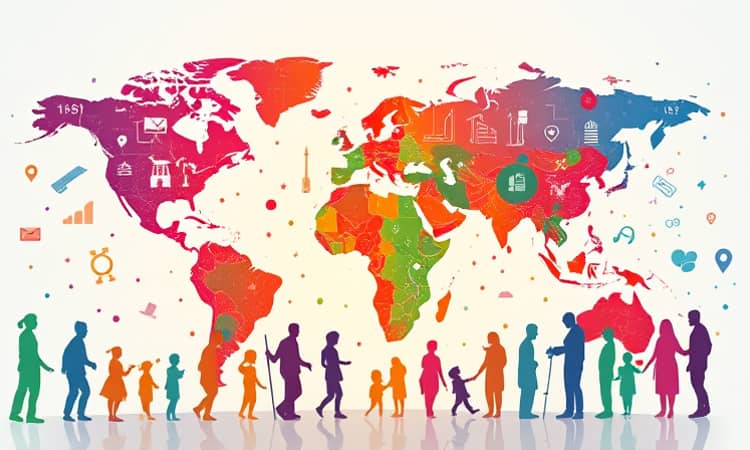
In an era defined by sweeping changes in birth rates, longevity, and migration, the global population is undergoing a fundamental transformation. These shifts will reshape economies, labor markets, and consumption habits in every region. By examining the trajectory of population growth, the aging of societies, and regional contrasts, we can understand how these trends will influence policy, business strategy, and social structures around the world.
Understanding Global Population Trends
The world population is on a path toward a peak of approximately 10.3 billion around 2084, followed by a gradual contraction to roughly 10.2 billion by 2100. This turning point signals a shift from long-standing growth to a period of decline, with annual contraction rates estimated at 0.13% by the end of the century. Presently, the global population stands near 8.1 billion and is projected to reach 9 billion by 2038.
Central to this transition are sharply falling fertility rates, which have dipped below the replacement threshold of 2.1 births per woman in much of Europe, North America, and East Asia. Simultaneously, the share of people aged 65 and over is rising rapidly, set to mirror the proportion of those under 25 by century’s end. Meanwhile, Sub-Saharan Africa remains the last major high-growth region, where populations could nearly double by mid-century in countries such as Niger and Uganda.
Labor Market Impacts
As societies age, they face shrinking labor supply with rising costs and potential skill shortages, particularly in healthcare and care-related fields. Many developed nations are witnessing a decline in their working-age populations, forcing businesses and governments to explore new strategies for sustaining productivity. In Spain, for example, retirements have outpaced new labor market entrants for the first time.
- Automation and robotics integration
- Immigration and talent attraction
- Upskilling and lifelong learning
- Increased older worker participation
Some nations are banking on immigration to fill gaps, but this measure alone cannot reverse deeply entrenched demographic trends. Others are fostering a more inclusive workforce by encouraging women’s participation and extending retirement ages. In contrast, regions with youthful demographics, notably parts of Africa and South Asia, have a limited window to capitalize on a demographic dividend window closing rapidly before they too confront aging workforces after 2040.
Consumption Patterns and Economic Implications
The changing age structure is altering the landscape of consumer demand. By 2050, seniors are expected to account for one-quarter of global consumption, doubling their share from the late 1990s. With longer lifespans, older adults will increasingly drive markets for healthcare, leisure, and financial services tailored to retirement planning.
- Growing health and wellness services
- Increased demand for care work
- Housing and education needs among youth
- Asset management and retirement finance
Conversely, youthful communities in developing nations will fuel demand for infrastructure, education, and entry-level employment. This divergent pattern means businesses must adapt portfolios to serve both a booming young population in some markets and an expanding senior demographic in others. As savings rates among retirees bolster asset prices, tensions may arise between young homebuyers and older asset holders over housing affordability and resource allocation.
Social and Fiscal Pressures
Governments face strains on healthcare and pension systems as the ratio of dependents to workers climbs. Public spending on medical care and social welfare is likely to surge, compelling policymakers to balance budgets through tax adjustments or borrowing. These pressures could deepen intergenerational divides, challenging social cohesion and political stability in regions where younger citizens feel burdened by the costs of an aging population.
At the same time, low fertility rates threaten the sustainability of pension schemes that rely on current workers to fund retirees. Some countries are exploring private savings vehicles and targeted subsidies to incentivize family formation and childbearing. However, cultural norms, lifestyle preferences, and economic uncertainties often dampen the effectiveness of such policies.
Migration, Urbanization, and Policy Responses
Migration emerges as a key adaptation tool, with labor inflows helping to offset workforce shortages. Yet balancing the pace and scale of migration with social integration remains a delicate endeavor. Policymakers are redesigning immigration quotas and offering language and retraining programs to ensure that newcomers can contribute effectively to host economies.
- Adjusting immigration quotas
- Incentives for family formation
- Urban planning and infrastructure investment
- Climate-adaptive resource management
In rapidly growing regions of Africa and South Asia, urban areas face mounting pressure on housing, water, and transportation. Strategic investments in sustainable infrastructure, coupled with environmental safeguards, are vital to prevent ecological degradation and to support burgeoning populations. Coordinated international support and public-private partnerships can help build resilient cities that accommodate millions of new residents.
Geopolitical Realignments and Future Outlook
Demographic trajectories will reshape global economic power and capital flows. As aging populations slow growth in Europe and East Asia, investment opportunities may shift toward younger, faster-growing markets in Southeast Asia, South Asia, and Africa. Companies and investors are already realigning strategies to capture emerging demand in these regions.
Moreover, the interplay between demographic change and climate vulnerability will influence migration patterns and geopolitical partnerships. Nations rich in human capital but constrained by environmental risks may seek new alliances to secure resources and technology. In this evolving landscape, adaptability, innovation, and inclusive policies will determine which societies thrive amid demographic upheaval.
Ultimately, understanding the depth and breadth of these demographic shifts is critical for businesses, governments, and individuals alike. By embracing proactive measures—ranging from workforce retraining and inclusive immigration to sustainable urban design and financial reform—stakeholders can navigate the challenges ahead and harness the opportunities presented by this once-in-a-millennium transformation of global labor and consumption.