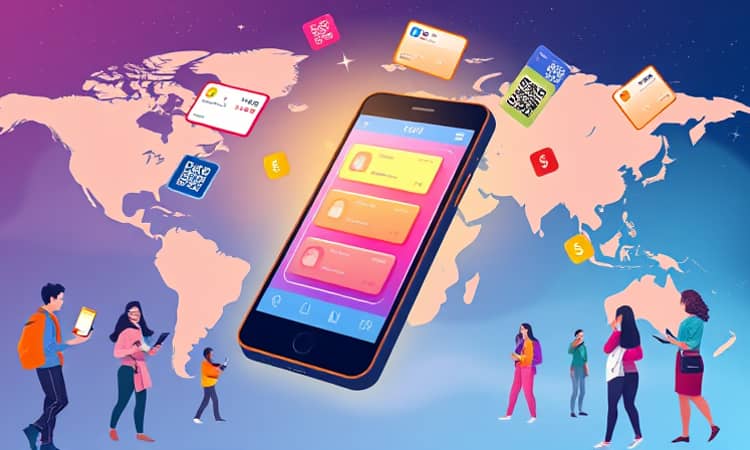
In an era defined by connectivity and innovation, digital wallets have emerged as central tools for financial empowerment. From bustling markets in Mumbai to tech hubs in Silicon Valley, these apps bring convenience and speed to transactions, transforming how we handle money every day.
With forecasts projecting that by 2025 digital wallets will represent 49–56% of global e-commerce transaction value and serve over two-thirds of the world’s population, understanding their mechanics, benefits, and risks is essential for anyone seeking financial agility and security.
The Rise of Digital Wallets
Digital wallets have evolved from niche fintech experiments into mass-market solutions. By 2025, user numbers are expected to hit 5.6 billion worldwide, with an additional 600 million joining by 2026. Transaction volumes are staggering: $14–16 trillion in global wallet payments, with mobile payments alone reaching an estimated $4.97 trillion.
QR code payments are a significant driver, projected to surpass $8 trillion in 2025. E-commerce platforms, retail outlets, and peer-to-peer networks increasingly integrate wallet support, fueling an unprecedented shift away from cash and plastic cards.
Early adopters in China now number 956 million, representing 87.3% of smartphone users making proximity mobile payments. India’s ecosystem, led by PhonePe and Google Pay with roughly 75% market share, saw transaction growth of 75% in 2024. Southeast Asia experienced a 311% increase in usage by 2025, while Latin America and Africa recorded 50% and 35% annual growth, respectively.
How Digital Wallets Work
A digital wallet is more than just a payment app: it securely stores payment methods—from credit cards and bank accounts to cryptocurrencies—allowing seamless transactions online and at the point of sale. Upon registration, users link their preferred methods and can also store digital IDs, loyalty cards, and tickets.
Behind the scenes, encryption and tokenization protect sensitive data. Each transaction uses randomly generated tokens instead of real card details, minimizing exposure to fraud. Key technologies include NFC (Near Field Communication) for tap-and-go payments and QR codes for quick scans.
Advanced security features like multi-factor authentication, biometric recognition, and real-time fraud monitoring provide layers of protection. Users receive real-time transaction notifications, empowering them to spot unauthorized activity instantly.
Money Management Features
Beyond simple payments, modern wallets integrate robust financial management tools. They offer intuitive dashboards where users can view, categorize, and analyze spending habits.
- Peer-to-peer transfers and cross-border transactions
- Service and bill payments: utilities, subscriptions, mobile top-ups
- Expense tracking with customizable categories
- Coupon, loyalty card, and event pass storage
- Cryptocurrency buying, selling, and wallet integration
Real-time budgeting features allow individuals to set spending limits, receive alerts when budgets are exceeded, and track savings goals automatically. Automated bill payments reduce late fees, while scheduled transfers help users build emergency funds effortlessly.
Advantages and Challenges
- Convenience: Payments with a tap or scan, no physical cash required.
- Speed: Instant settlements compared to traditional banking delays.
- Financial inclusion: Access for the unbanked in regions like Africa and South Asia.
- Centralized management: Multiple accounts under a single interface.
- Safety: Encryption and tokenization reduce fraud risks.
- Merchant acceptance lag: Under 60% of U.S. small businesses accept wallets.
- Privacy concerns: Risks of hacking or phishing if best practices aren’t followed.
- Technology dependency: Requires reliable internet and compatible devices.
- Ecosystem fragmentation: Limited interoperability across regional apps.
Regional Adoption and Demographics
Adoption varies greatly by geography. While North America and Europe exhibit high usage—90% of adults in North America use digital payments—emerging economies are leading rapid growth.
Demographically, Gen Z and Millennials are the most enthusiastic users. In the U.S., 64% of under-25s adopt apps like Cash App, while older generations increasingly embrace wallets for their simplicity and security.
Future Trends and Outlook
Looking ahead, contactless payments will dominate retail, with digital wallets projected to handle 75% of all contactless transactions by 2025. The subscription economy continues to flourish: 80% of global subscribers now pay via wallets.
Cross-border wallet transactions are expected to grow by 45% in 2025, driven by remittance needs and e-commerce expansion. Emerging markets like India, Southeast Asia, and Africa will further fuel global user counts, nearing 6.2 billion by 2026.
Cryptocurrency integration is on the rise. Wallets such as MetaMask and Trust Wallet saw user counts grow by 35% in 2025, with global crypto transaction volumes projected at $10.8 trillion.
Innovation in AI-driven budgeting, biometric authentication, and interoperable blockchain solutions promises a future where digital wallets offer personalized financial coaching, proactive fraud prevention, and seamless global payments.
As digital wallets reshape the financial landscape, mastering their use is both a practical necessity and an opportunity to embrace greater control over one’s money. By exploring available features, choosing secure platforms, and leveraging real-time insights, users can unlock the full potential of modern money management tools.