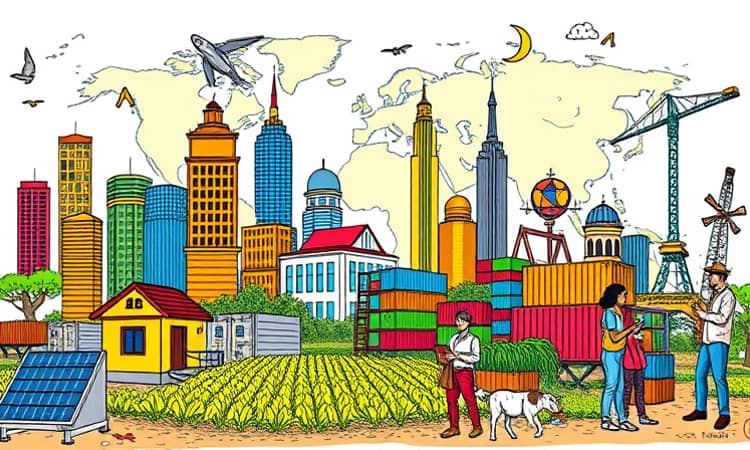
Emerging markets are poised to shape the global economy in 2025 and beyond. With real GDP growth projected at around 3.7%, these dynamic economies outpace advanced nations, offering unparalleled opportunities and inspiring a new wave of innovation.
Investors, entrepreneurs, and policymakers alike must understand the forces driving this momentum and learn how to navigate the landscape to seize transformative results.
Global Growth Engine
Emerging markets will account for over half of global GDP in 2025, representing a collective weight that cannot be ignored. The IMF forecasts growth in all 24 tracked emerging economies, led by India (6.5%), the Philippines (6.2%), Saudi Arabia (6.0%), and Indonesia (5.1%). In contrast, the US and UK hover around 1.5% to 1.9%.
Inflationary conditions are moderating, with average rates declining from 8% in 2024 to an expected 5% in 2025. Yet in some regions, inflation remains notably elevated, underscoring the need for vigilant monetary policies and strategic planning.
This table highlights the stark contrast between fast-growing emerging markets and mature economies. Understanding these differences is the first step toward making informed decisions.
Underlying Drivers of Growth
Several powerful forces underpin the rise of emerging markets. Recognizing these drivers helps businesses and investors align strategies with local realities.
- Resilient domestic demand supported by expanding middle classes
- Rapid digital transformation through mobile internet and e-commerce
- Ambitious policy reforms encouraging foreign investment and infrastructure
- Youthful and growing population fueling consumption and innovation
Digitalization, in particular, has enabled economies in Southeast Asia, Africa, and India to leapfrog traditional development stages. Africa’s urban share is set to hit 60% by 2050, while Southeast Asia’s internet economy could exceed $600 billion by 2030.
Sectoral Opportunities
Diversification of industries is creating pockets of exceptional growth. Targeting the right sectors can amplify returns and social impact.
- Renewable energy investments in solar, wind, and green hydrogen
- Fintech innovation hubs transforming banking and payments in Africa
- Consumer market expansion driven by urbanization and rising incomes
India and China lead clean energy manufacturing, filling leadership vacuums left by shifting policies in advanced economies. Meanwhile, mobile money platforms in Kenya and Nigeria are extending financial inclusion to millions.
Risks and Challenges
No high-reward environment is without hazards. Understanding risks is essential to building resilience and safeguarding investments.
- Persistent inflationary pressures above central bank targets
- Market volatility and political shifts impacting capital flows
- Geopolitical tensions affecting trade and supply chains
- Structural inequality with pockets of poverty and high unemployment
Tariff disputes, commodity price swings, and regulatory changes can create sudden headwinds. Investors must watch for external shocks and adjust exposure across countries and sectors.
Strategies for Investors and Businesses
Entering emerging markets requires a nuanced approach. The following guidelines will help align objectives with local conditions.
- Conduct comprehensive market research and competitive analysis
- Adapt offerings to cultural, digital, and regulatory environments
- Develop flexible entry models: joint ventures, partnerships, or greenfield projects
- Monitor currency risks and consider hedging strategies
- Invest in local talent and mix parent-country and host-country nationals
Localization goes beyond language; it involves customizing products, pricing, and marketing to resonate with diverse consumer segments. In fintech, partnerships with established local players can accelerate adoption and trust.
Country and Regional Spotlights
Understanding regional nuances sharpens strategic focus. For instance, the BRICS group continues to command a significant share of global growth.
Brazil’s recent rebound, Russia’s adaptation to sanctions, India’s tech-driven expansion, China’s pivot to domestic consumption, and South Africa’s commodity-led output each tell a unique story. In Southeast Asia, high mobile penetration and e-commerce uptake create fertile ground for tech startups and consumer brands.
Regional cooperation, such as ASEAN frameworks or intra-African trade agreements, further enhances market access and reduces barriers.
Conclusion: Seizing the Moment
As emerging markets accelerate past 3% growth, they ignite possibilities across sectors and geographies. By combining rigorous analysis with agile, localized strategies, stakeholders can tap into transformative opportunities while contributing to sustainable development.
Whether you are an investor seeking high-growth assets, a corporation exploring new markets, or a policymaker aiming to foster inclusive prosperity, the age of emerging markets offers a canvas rich with potential.
Embrace the journey, manage risks proactively, and align your vision with the dynamism that defines these vibrant economies. The global future is being written in cities from Mumbai to Manila, Lagos to Lima—will you be part of the story?