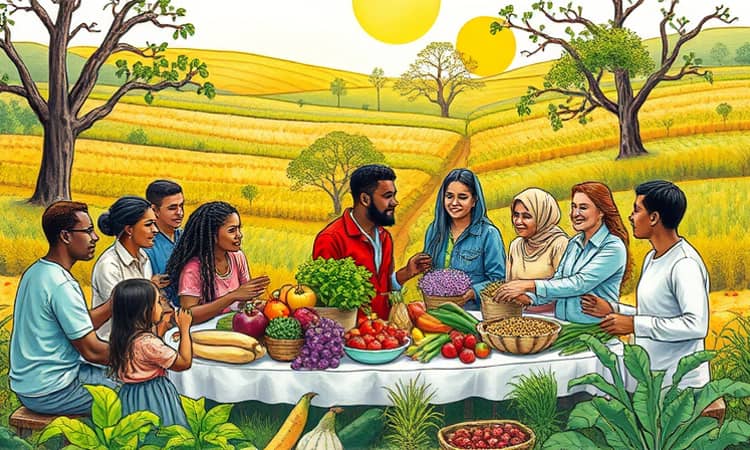
Enduring hunger shadows millions worldwide even as we pursue progress in technology, economy, and human rights. Food security, a cornerstone of sustainable development, demands that every individual enjoys physical and economic access to food, while also ensuring nutritional quality. The persistence of malnutrition and inequity demonstrates that we cannot ignore this issue. Persistent hunger and deep inequalities threaten stability, growth, and human dignity, calling for urgent collective action.
Understanding Food Security
At its core, food security is defined by four dimensions: availability, access, utilization, and stability. These pillars represent the full spectrum of challenges encountered from the farm to the table. Four key dimensions of food security guide policymakers, researchers, and practitioners in assessing needs, designing interventions, and tracking progress. By measuring production capacities, income, nutritional use, and resilience to shocks, we can tailor appropriate solutions that address local and global realities.
Availability concerns the reliability of supply through agricultural production, stocks, and trade routes. Access hinges on individuals’ ability to secure food, influenced by wages, prices, infrastructure, and social norms. Utilization examines how food is processed, prepared, and metabolized, requiring clean water, healthcare, and education. Stability assesses the consistency of these factors over time, safeguarding communities from political upheaval, extreme weather, or economic disruption.
Robust data collection and analysis underpin effective food security strategies. Organizations like FAO and WFP leverage satellite imagery, household surveys, and local reports to map hunger hotspots in real time. These insights inform targeted interventions, ensuring that aid reaches those most in need. Technological tools, including mobile data collection and AI-driven modeling, enhance precision, reduce waste, and improve early warning systems, strengthening the stability and resilience of food systems at local and global scales.
Current Global Statistics and Disparities
Recent data paint an alarming picture. Over 295 million people faced acute hunger in the past year alone, marking the sixth consecutive rise. Between 638 and 720 million individuals—roughly 8% of humanity—endured chronic hunger in 2024. In 2025, approximately 1.2 million people live in catastrophic conditions, where food scarcity threatens mass mortality. Millions facing acute food shortages underscores the scale of a crisis that spans continents and defies simplistic solutions.
- Sub-Saharan Africa: 332 million food-insecure (26.9% of population)
- Asia: Rate dropped from 15.4% to 8.1% due to economic improvements
- Women and girls: Approximately 60% of the chronically hungry
- Children: Over a million acutely malnourished in 13 countries
Drivers of Food Insecurity
Food insecurity arises from a complex interplay of factors. Conflict and displacement remain the predominant triggers, uprooting communities and blocking access to fields and markets. Climate extremes—droughts, floods, and erratic weather—erode harvests and destabilize supply chains. Economic shocks like inflation, debt distress, and market volatility compound vulnerabilities, especially in low-income nations. Additionally, systemic issues like disinvestment in agriculture, flawed policies, and excessive food waste impede progress and perpetuate chronic hunger across vulnerable populations.
- Conflict and displacement in hotspots like Yemen, Sudan, and Gaza
- Climate extremes disrupting farming and supply networks
- Economic shocks: high food prices, inflation, debt distress
- Market dysfunction and underinvestment in rural agriculture
- Food waste: one third of global production lost or wasted
Economic and Human Impact
The economic repercussions of food insecurity are profound. Nations struggling with hunger see slowed growth, eroded labor productivity, and weakened trade capacity. Hungry children face impaired cognitive and physical development, leading to long-term setbacks in education and workforce readiness. Devastating impact on economic growth reverberates across communities, pushing vulnerable families deeper into poverty and perpetuating cycles of deprivation.
At the human level, malnutrition translates into increased morbidity, stunted growth, and heightened mortality rates, especially among children under five. Overburdened health systems and lost labor hours drain resources, while social tensions over scarce resources can spark conflict. Addressing these challenges yields returns in health, education, and stability, making investment in food security a critical lever for equitable development.
Policy Responses and Innovations
To combat this crisis, a multifaceted approach is required. Governments, international organizations, civil society, and the private sector must align strategies, share data, and mobilize resources. Expanding safety nets and emergency relief protects the most vulnerable, while long-term investments in climate-smart agriculture build resilience. Supply chain improvements reduce losses, and gender-sensitive policies empower women farmers.
- Strengthening social protection: cash transfers and food vouchers
- Investing in climate-smart agriculture and sustainable practices
- Enhancing infrastructure to cut post-harvest losses
- Promoting public-private partnerships and innovation funding
- Supporting gender equality in farming and resource access
Innovative programs in countries like India and Brazil illustrate the power of data-driven policy and community engagement. Precision agriculture techniques in India have increased yields by up to 20% in drought-prone areas, while Brazil’s zero-hunger initiative combined conditional cash transfers with nutrition education to halve child malnutrition in a decade. Scaling such models globally requires political will, sustained funding, and partnerships across sectors and borders.
Future Outlook and Call to Action
Progress toward ending hunger by 2030 remains off track, yet hope endures. Success stories in regions where policy reforms, economic growth, and community-driven programs converged demonstrate that positive change is possible. By harnessing innovation, strengthening partnerships, and committing resources, we can turn the tide on global hunger.
At the individual level, consumers can contribute by reducing food waste, choosing locally produced foods, and supporting ethical supply chains. Civil society can advocate for policy reforms and hold institutions accountable for transparent use of resources. Young people, armed with digital platforms, can drive awareness, fund innovation, and implement grassroots solutions. Collective action at every level is vital to close the gap between aspiration and reality. Reducing food waste and supporting local producers empowers communities and strengthens global resilience.
Food security is more than an economic indicator; it is a measure of our shared humanity. Every step toward ensuring that people everywhere have access to safe, nutritious food is a step toward peace, stability, and prosperity. It is time to embrace a shared global responsibility for food security and take bold action.