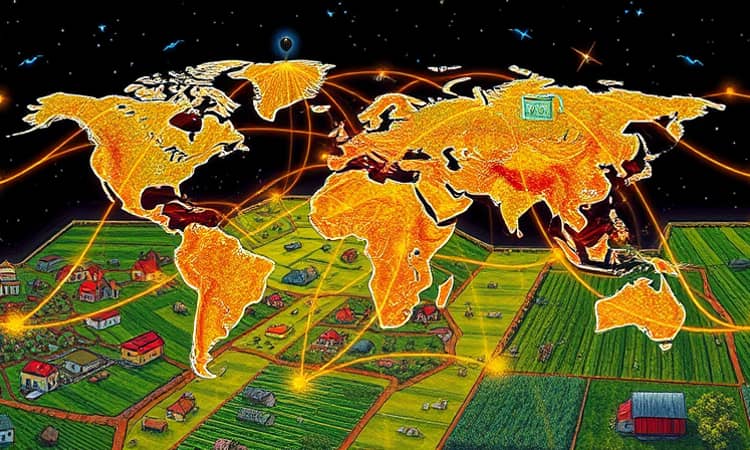
In an era defined by rapid change, the interplay between local decisions and global outcomes has never been more critical. From supply chains to climate action, understanding how small-scale trends aggregate into major shifts empowers communities and policymakers alike.
Understanding Micro and Macro Dynamics
Microeconomics focuses on the actions of individual agents—households, firms, and local governments—and explores how choices about consumption, investment, and innovation affect specific markets. Macroeconomics examines the bigger picture, including aggregate output, unemployment, inflation, and trade balances.
By recognizing the link between granular data and sweeping global patterns, we can address challenges more effectively and design smarter policies that resonate at every level.
Micro Trends: The Local Level
Local communities drive change through daily decisions and targeted initiatives. Whether it’s a family-owned shop adopting renewable energy or a city launching a digital education platform, these efforts set the stage for larger transformations.
- Local business innovation spurring new product markets and job creation.
- Community-led sustainability projects reducing resource waste.
- City governments modernizing services with AI and data analytics.
- Consumer shifts favoring nearby producers over global brands.
Macro Impact: Aggregation and Feedback
When multiplied across regions and sectors, local actions can reshape economies. For example, global growth expected to slow to 2.3% in 2025 reflects the cumulative effect of policy uncertainty, trade fragmentation, and shifting consumer behaviors.
The global population now exceeds 8.2 billion, and clean energy investment has soared to a staggering $2 trillion. This massive clean energy investment fueled a 92.5% share of new electricity capacity in 2024, driving prices down and accelerating the transition.
These macro trends, in turn, influence local realities—national recessions can trigger city-level budget cuts, while global climate targets inspire small municipalities to upgrade water infrastructure and adopt green building codes.
Case Studies: Local to Global
Energy transition efforts in China demonstrate how regional deployment can ripple worldwide. In Q1 2025, China produced nearly as much solar power as it did in all of 2020, making clean energy nearly 10% of its GDP. Similarly, Sub-Saharan Africa faces acute water scarcity and agricultural losses, reminding us that local vulnerabilities contribute to global food security issues.
In the realm of technology, genAI will reshape sectors by creating 170 million jobs by 2030 while automating 92 million. Women, who represent 57% of positions likely to be disrupted, underscore the importance of targeted local reskilling programs to prevent widening inequalities.
During the pandemic, cities lost 15–25% of their revenues, revealing how health crises can devastate municipal finances. This case highlights that local governments lost significant revenues when global shocks strike, necessitating robust contingency planning at the grassroots.
Macro Shocks and Local Responses
Trade fragmentation and geopolitical tensions have driven average US tariff rates to 18.2% as of July 2025—the highest since 1934. These soaring tariff rates reach unprecedented highs, prompting firms to reshore production and diversify supply chains, with measurable effects on local labor markets and global inflation.
Demographics also link local and global spheres. In several advanced economies, 25% of citizens are over 65, creating strains on healthcare systems, pension schemes, and the labor force. Declining birth rates in key regions contribute to a flattening of world population growth, illustrating how regional trends can steer global trajectories.
The Way Forward: Integrating Micro and Macro Approaches
Effective solutions require both granular insights and big-picture perspectives. Policymakers should ground decisions in local data—what economists call microfoundations—while considering how aggregated actions shape macro outcomes.
By understanding local data drives policy, leaders can craft targeted interventions that scale. The following recommendations offer a blueprint for connecting local innovation to global progress:
- Invest in upskilling and reskilling programs to bridge skills gaps and ensure inclusive growth.
- Encourage public–private partnerships to modernize city infrastructure and foster resilience.
- Support small and niche brands to strengthen local economies and diversify global supply chains.
- Channel climate finance to community-led projects that deliver measurable emissions reductions.
- Enhance data sharing between municipal, national, and international bodies to improve policy coherence.
Additional Trends to Monitor
Emerging dynamics at the local level can signal forthcoming global shifts. Keep an eye on:
- Declining consumer trust in established global brands.
- Rapid rise of local and niche producers capturing market share.
- Gender and age disparities in technology adoption and employment.
- Regional gaps in energy transition progress and digital infrastructure.
By weaving together micro and macro lenses, individuals, businesses, and governments can navigate uncertainty, foster innovation, and build a future where local ingenuity fuels global prosperity.