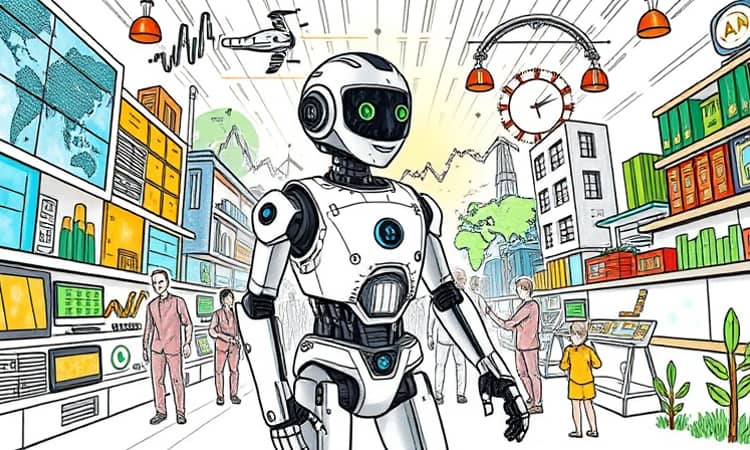
In 2025, markets face an unprecedented pace of change driven by technological breakthroughs, demographic shifts, and geopolitical tensions.
The Nature of Disruption: What It Means to "Innovate or Stagnate"
Disruption occurs when an innovation fundamentally shifts market structures, creating new value networks and displacing legacy players. This process often favors nimble entrants who can exploit emerging trends, leaving incumbents vulnerable if they remain fixated on sustaining innovations.
The roots of disruption span technological shifts, regulatory changes, and global crises, each capable of triggering a cascade of market realignments. Incumbents typically focus on existing customer bases, while new players redefine value propositions for unmet needs.
Embracing disruption demands a mindset shift: recognize change as permanent, not cyclical, and treat innovation as core to survival rather than occasional advantage.
The Big Six Forces Redrawing Global Markets
From digitization to climate imperatives, six forces dominate the global landscape in 2025:
- Global Demographics: Aging populations and rapid urbanization reshape demand patterns.
- Digitization & Automation: AI, robotics, and real-time data redefine productivity and business models.
- Hybrid Work Models: A balance of remote and office work shifts organizational structures.
- Climate & Energy Transition: Decarbonization mandates and green innovations drive capital flows.
- Geopolitical Instability: Trade fragmentation and technology competition alter supply chains.
- Business Model Innovation: Subscription, circular economies, and platform strategies challenge traditional revenue streams.
Key Trends and Disruptors in 2025
Leading organizations track critical metrics to anticipate and harness disruption. The table below highlights pivotal data points and their implications.
AI and automation remain the largest opportunity areas, with 81% of leaders convinced they will optimize supply chains. Meanwhile, multi-shoring strategies boost supply reliability by ten percentage points, reflecting a shift toward agility as the new resilience.
Geopolitical competition—especially between the US, China, and the EU—fuels investments in AI, semiconductors, and clean energy. Firms modifying growth plans due to US-China relations now exceed half of all companies surveyed.
Sustainability transforms from compliance to strategy: early adopters of green technologies unlock new markets, while laggards risk escalating costs and regulatory exclusion.
Incumbents vs. Entrants: The Race for Market Supremacy
Entrants capitalize on market asymmetries and unmet demand, leveraging nimbleness to craft novel business models. Incumbents, by contrast, often fall prey to the innovator’s dilemma, focusing resources on established customer needs and thus overlooking disruptive threats.
Case studies demonstrate how platform-based challengers and subscription pioneers have toppled giants by redefining pricing, distribution, and user engagement. Success now hinges on partnering with startups, spinning off ventures, and embedding venture capital arms within corporations.
Consumer, Labor, and Societal Perspectives
Consumers increasingly favor digital channels and eco-conscious brands, spending more time online but demanding authentic experiences. Companies that harness data analytics to personalize offerings gain a critical edge.
Labor markets confront a dual challenge: AI augments decision-making but displaces both repetitive and cognitive roles. Reskilling initiatives and lifelong learning programs have become essential, with 58% of organizations boosting workforce training budgets in 2025.
Economic polarization and trust erosion spur social unrest, which in turn elevates business risk. Firms that engage transparently with stakeholders and invest in community resilience build deeper trust and social license to operate.
Navigating Permanent Disruption: Strategies and Tools
In an era where change is constant, companies must blend defensive safeguards with offensive innovation. Key tactics include:
- Investing in agility and innovation pipelines to respond rapidly to market signals.
- Building real-time data management systems for proactive decision-making.
- Enhancing supply chain digitalization and multi-sourcing for resilience.
- Developing new products and business models with cross-industry collaboration.
- Embedding scenario planning and continuous risk assessment into corporate strategy.
Organizations that master these tools not only survive disruption—they transform it into a competitive advantage.
Conclusion: The Imperative to Innovate
Disruption in 2025 is not a fleeting wave but a permanent tide reshaping every sector. Companies that view innovation as a strategic imperative, rather than a project-based effort, position themselves to lead new markets and deliver sustainable growth.
The choice is stark: innovate or stagnate. By embracing a culture of experimentation, investing in emerging technologies, and continuously realigning business models, organizations can thrive amidst uncertainty and chart a course toward long-term success.
The future rewards the bold. Now is the time to act.