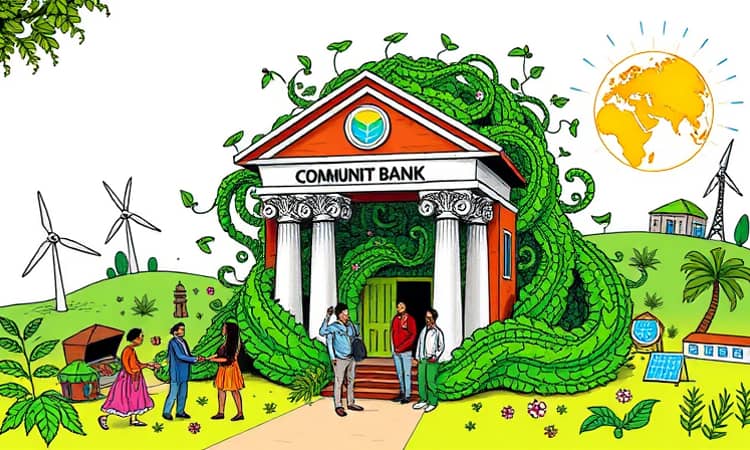
In an era defined by climate challenges, social inequalities, and shifting economic landscapes, sustainable lending emerges as a transformative approach that drives both profitability and purpose. By weaving together ecological preservation, community advancement, and financial robustness, institutions can foster a healthier planet and more inclusive societies. This article explores how holistic environmental, social and economic value becomes the cornerstone of modern finance.
Understanding Sustainable Lending
Sustainable lending integrates traditional credit assessment with rigorous evaluation of environmental, social, and governance criteria. Rather than focusing solely on financial returns, lenders aim to generate positive outcomes for ecosystems and communities without compromising long-term viability.
At its core, sustainable lending rests on three interdependent pillars:
- Environmental Responsibility: Financing projects that reduce carbon footprints, promote biodiversity, and support clean energy.
- Social Responsibility: Delivering inclusive finance solutions, microloans for underserved populations, and community development programs.
- Economic Viability: Ensuring that financed ventures remain profitable, adaptive, and resilient under evolving market conditions.
Global Standards and Frameworks
To bring consistency and accountability to sustainable finance, international bodies have introduced comprehensive guidelines. The Principles for Responsible Banking, endorsed by over 260 banks, set commitments across governance, customer engagement, investment selection, and environmental stewardship.
Green Loan Principles define clear expectations for environmentally beneficial lending:
- Use of proceeds—funds must support projects with direct ecological benefits.
- Project evaluation and selection—applying objective environmental criteria.
- Management of proceeds—maintaining transparent allocation records.
- Reporting—regular impact disclosures to stakeholders.
Sustainability-Linked Loans encourage borrowers to meet specific targets, tying interest rates to performance metrics that reflect corporate social responsibility ambitions.
Measuring Impact and Growth
Despite remarkable momentum, the sustainable finance sector still grapples with scale and data challenges. More than 90% of global banks now incorporate sustainability into their strategies, yet only a fraction of the US$100 trillion required for a net-zero transition has been mobilized.
Standardized metrics and clear disclosures are vital to track progress and build trust. A comparative overview of loan categories highlights their distinct roles:
Ethical Considerations and Social Responsibility
Sustainable lending is not just a technical exercise; it is a moral imperative. Financial institutions must avoid predatory financial practices that exploit vulnerable borrowers or obscure fees. By upholding transparent and accountable financial practices, banks can build deep trust with customers and communities.
Equitable governance structures ensure that staff receive fair treatment and training, while communities benefit from investments in education, healthcare, and local enterprises. Microfinance initiatives, for example, empower entrepreneurs who lack access to traditional credit, fostering long-term socio-economic uplift.
Barriers and Regional Disparities
Despite widespread recognition of its benefits, sustainable lending faces significant obstacles. The absence of consolidated impact performance data creates inconsistency, making it challenging to compare institutions or products.
Moreover, regional disparities persist: developed economies lead adoption, while many emerging markets struggle with limited capacity, regulatory uncertainty, and lower awareness. In ASEAN, for instance, only 2% of banks have fully integrated sustainability frameworks, highlighting the need for targeted capacity-building efforts.
The Road Ahead: Opportunities and Innovations
Looking forward, collaboration between regulators, financial institutions, and civil society will be pivotal. Upcoming regulatory initiatives—such as the EU Sustainable Finance Action Plan and enhanced disclosure rules—promise to drive uniformity and transparency.
Meanwhile, technological advancements in data analytics, blockchain, and remote sensing can streamline monitoring of environmental outcomes, ensuring measurable social and environmental progress and reducing greenwashing risks.
Stakeholder engagement also remains a powerful catalyst. Consumer demand for ethical products and investor pressure have already prompted over 80% of institutional investors to adopt responsible investment principles. As awareness grows, sustainable lending will increasingly influence corporate behavior and shape global economic trajectories.
Conclusion
Sustainable lending transcends traditional finance by embedding ethical values and long-term resilience into credit decisions. It fosters a symbiotic relationship between profitability and planet health, empowering communities and safeguarding ecosystems. By embracing global standards, enhancing transparency, and innovating digital tools, financial institutions can unlock the full potential of sustainable lending—fueling a more equitable and stable world for generations to come.