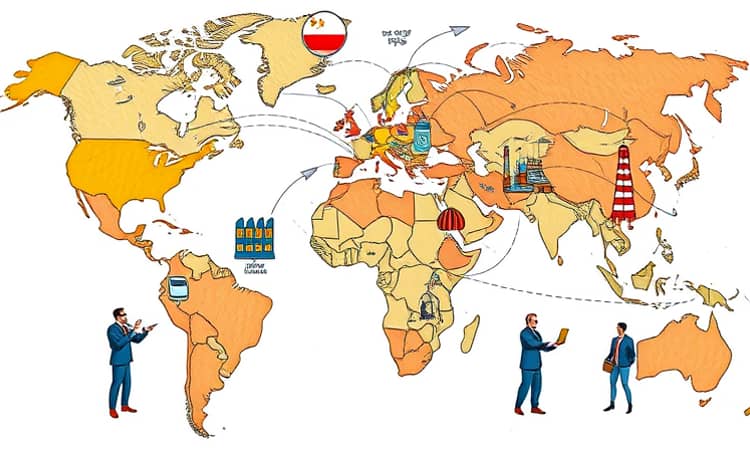
Global politics no longer exists at a distance from boardrooms and balance sheets. As national interests collide, businesses must navigate an increasingly turbulent economic environment. This article explores how political decisions—from tariffs to sanctions—directly impact corporate profitability and strategic planning.
Current Geopolitical Landscape and Macro Trends
Today’s world economy is marked by accelerating fragmentation and protectionism trends. Nations are reevaluating decades of integration, favoring economic nationalism over global cooperation. This shift has ramped up operational costs and injected uncertainty into market projections.
Major conflicts such as the Russia-Ukraine war and the Israel-Hamas hostilities have driven commodity prices higher. In parallel, the US-China rivalry now shapes technology and trade rules on a global scale. Nearly one-third of CEOs cite this rivalry as a primary threat to growth and stability.
- Protectionist policies at multi-decade highs
- Supply chain rerouting and increased logistics costs
- Inflation driven by energy and food price surges
Direct Business Impacts: Financial and Operational
Political volatility translates into immediate financial consequences for global firms. Rising energy prices, cited by many executives as a top risk, erode profit margins across sectors. Sudden tariff hikes or trade wars can disrupt decades-old procurement networks overnight.
Regulatory unpredictability further complicates long-term planning. Environmental mandates, new tax codes, and export controls alter cost structures and investment returns. As a result, companies face elevated risk premiums on capital and insurance, making expansion more expensive.
- Input cost increases from duties and quotas
- Currency instability inflating operating budgets
- Higher insurance and compliance expenses
Sector-Specific Examples
Different industries feel the political tremors in unique ways. In energy, conflicts in oil-producing regions lead to price spikes that ripple through manufacturing, transportation, and consumer goods markets. Sudden supply disruptions can trigger months of volatility.
In technology and manufacturing, export controls on semiconductors and rare minerals force companies to rethink plant locations and supplier agreements. Initiatives to “derisk” operations often come at the expense of efficiency and cost savings.
- Agriculture hit by grain export bans and fertilizer shortages
- Pharmaceuticals facing complex approval changes abroad
- Automotive manufacturers balancing import duties and localization
Shifting Capital Flows and Tax Policy
Cross-border investment decisions now reflect political alignments as much as economic fundamentals. Governments impose new disclosure requirements and digital service levies to capture revenue, influencing where firms channel capital.
The global minimum tax regime under OECD guidelines aims to curb profit shifting by multinationals. Businesses must adapt to evolving tax landscapes in multiple jurisdictions, recalculating effective rates and redeploying resources accordingly.
Regulatory and Compliance Environment
Sanctions, export bans, and tightened ESG rules expand the list of compliance obligations. Companies in finance, tech, and defense must integrate sophisticated monitoring tools to stay ahead of policy shifts. Failing to comply can result in fines, lost market access, or reputational damage.
Increasingly, boards allocate dedicated teams to track geopolitical developments and regulatory changes. This trend underscores the need for holistic risk management frameworks that align with evolving legal requirements and stakeholder expectations.
Corporate Strategic Responses
In response to these challenges, firms adopt several strategic measures. Many pursue reshoring or nearshoring to reduce exposure to high-risk regions. While this can {{ sometimes }} increase unit costs, it also enhances supply chain visibility and resilience.
Leading organizations now employ scenario planning and geopolitical stress tests in governance reviews. Combining insurance solutions with currency and commodity hedging helps cushion sudden market disruptions and protects profit margins.
Firms also engage directly with policymakers to shape regulatory outcomes. Establishing government affairs units or appointing “Chief Geopolitical Officers” demonstrates a proactive approach to risk mitigation and fosters lines of communication that can prove decisive during crises.
Selective realignment of production and investment can unlock new growth corridors. Southeast Asia, Eastern Europe, and Latin America offer attractive incentives for companies shifting away from contested zones. Agile players converting challenges into opportunities often secure a competitive edge.
Looking ahead, the proliferation of geopolitical risk will likely continue. Businesses that embed thorough risk assessments into their strategic planning, embrace flexibility, and invest in intelligence capabilities will be best positioned to protect and grow profits despite political headwinds.
By acknowledging the pervasive influence of geopolitics on markets and adopting a robust, adaptive strategy, firms can navigate uncertainty and uncover new pathways to sustainable success.