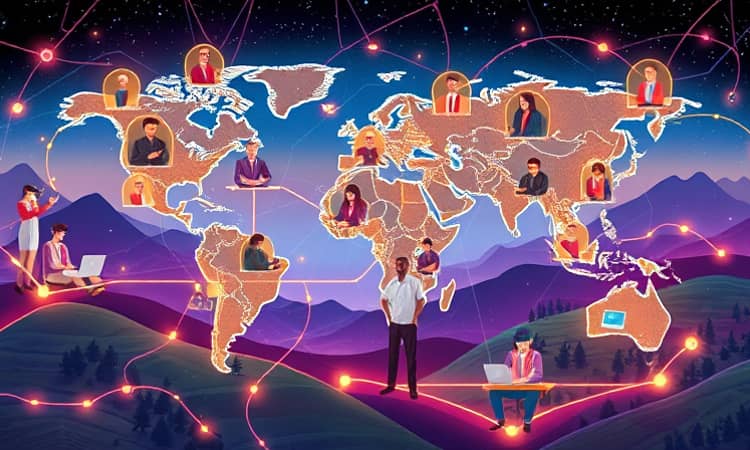
Across continents and industries, the way we work is undergoing a profound transformation. The rise of the gig economy heralds new possibilities and challenges for millions pursuing freedom and flexibility.
Definition and Background
The gig economy refers to labor markets defined by short-term contracts, freelance engagements, and on-demand services often mediated by digital platforms. It encompasses everything from ridesharing and food delivery to consulting, design, and software development.
Originally born from technological advances and shifting cultural attitudes, gig work has evolved into a future defined by flexible autonomy—a model where workers choose projects, set their hours, and tap into global demand.
Scale and Size
Recent data reveals that between 154 million and 435 million people worldwide engage in platform-based gig work, representing 4.4%–12.5% of the global labor force. Annual revenues in this segment reach $3.8 trillion, with platform-driven revenues alone ranging from $455 billion to $646 billion.
In the U.S., 70 million freelancers contribute $1.27 trillion annually, and experts predict over half the workforce will freelance by 2027. By the mid-2030s, global gig market value could exceed $2.1 trillion, driven by a projected 15–16% CAGR.
Demographics and Trends
Gen Z and Millennials dominate the gig landscape, making up roughly 78% of platform workers. Digital natives embrace remote collaboration and flexible schedules, leveraging technology to build careers on their terms.
Urban centers host about 43% of freelancers, while transitional economies—fueled by crises like the COVID-19 pandemic and regional conflicts—see surges in gig participation as a pathway to economic resilience.
Freelancers range from ride-hail drivers to white-collar professionals offering specialized services. This diversification signals a resilience-building work paradigm where independent workers mitigate risk by pursuing multiple income streams.
Drivers of Growth and Technological Impact
Digital platforms such as Upwork, Fiverr, and specialized industry portals provide the infrastructure for instant matchmaking, global payments, and portfolio showcasing.
At the same time, AI and automation reshape how tasks are performed. By 2025, 60% of freelancers will rely on AI tools for research, content creation, and even client communication. This cutting-edge AI professional skill development accelerates productivity and opens doors to higher-value projects.
Looking ahead, human talent will increasingly integrate with intelligent systems—the hallmark of blending human creativity with AI. This synergy promises unprecedented efficiency and innovation.
Challenges and Risks
- Income volatility and unpredictability
- Absence of traditional employment benefits
- Regulatory ambiguity across jurisdictions
- Platform dependency and algorithmic bias
Many gig workers face fluctuating earnings without guaranteed contracts, leaving them vulnerable during economic downturns. Healthcare, retirement, and unemployment coverage often remain piecemeal or nonexistent.
Moreover, legal frameworks are evolving unevenly. While the EU moves toward formalizing gig work, other regions grapple with ambiguous contractor classifications and the absence of portable benefits.
Opportunities and Practical Strategies
- Diversify skills through continuous learning
- Build a strong digital reputation
- Leverage multiple platforms strategically
- Collaborate with AI tools effectively
Thriving in the gig economy requires more than technical expertise. It demands a proactive mindset: seeking feedback, networking with peers, and adapting to market trends.
By investing in professional development and cultivating a personal brand, freelancers can command premium rates and secure long-term engagements. This strategic diversification of income streams safeguards against downturns and positions creators for growth.
Policy Landscape and Future Outlook
Governments worldwide are experimenting with portable benefit schemes, gig-specific labor laws, and universal insurance models. Clarity is expected by 2030, creating a more stable environment for independent workers.
Prospects remain bright: as businesses prioritize agility and cost efficiency, demand for on-demand talent will surge. The gig economy stands as a global talent marketplace empowered to match skills with opportunity instantly.
Emerging markets will play an increasingly vital role, supplying remote expertise and fostering inclusive growth through expanded internet access and digital literacy.
Conclusion
The gig economy is not a transient trend but a fundamental shift toward self-directed, project-based work. It offers unprecedented freedom, but also requires disciplined planning, continuous learning, and strategic positioning.
By embracing innovation, collaborating with AI, and advocating for fair policies, individuals and organizations can build a resilience-building work paradigm that benefits everyone. Now is the moment to seize the opportunities of this dynamic era and shape the future of work on your own terms.