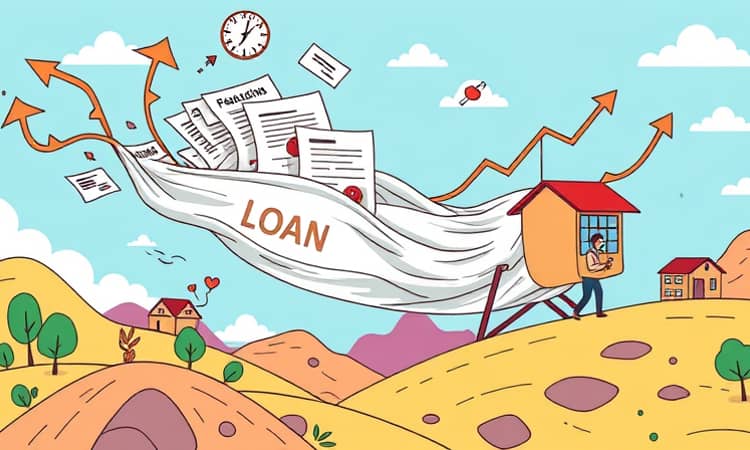
In an era defined by shifting economic currents, the relationship between macroeconomic forces and loan products has never been more critical. As businesses and consumers navigate rising rates, inflation, and policy uncertainties, lenders must adapt their offerings to maintain profitability and serve evolving needs. This article explores how the economic winds of 2025–26 shape lending standards, product innovation, and borrower behavior, providing actionable insights for stakeholders.
Macroeconomic Backdrop: Winds of Change
The macroeconomic environment plays a pivotal role in determining credit availability and cost. Heading into 2025, the U.S. economy is expected to grow at approximately 2.0–2.2%, a modest deceleration from 2024’s 2.4%. This moderation reflects the sustained impact of elevated interest rates and ongoing global policy headwinds, including tariffs that raise operational costs for exporters and importers alike.
Inflation remains above target, keeping the Federal Reserve’s policy rate firmly above neutral and tempering consumer price growth. In parallel, more than 45% of banking professionals report moderate economic instability, citing trade disruptions and regulatory shifts as sources of uncertainty. Despite these challenges, robust real wages and healthy debt-to-income ratios have bolstered consumer confidence, underpinning lending activity.
- GDP growth forecast: 2.0–2.2% in 2025.
- Mortgage rate outlook: 6.5% by 2025 year-end, easing to 6.3% in 2026.
- Policy uncertainty: New tariffs raising supply chain costs.
Loan Product Trends and Sectoral Insights
Loan growth overall is projected around 6% in 2025, recovering from 3% in 2024 but still trailing the long-term average of 7%. Strong consumer spending and tentative rebounds in housing and commercial lending drive this momentum. Yet, beneath aggregate figures lie divergent trends across sectors.
- Mortgage Loans: Affordability concerns and a “lock-in effect” curb home sales, forecast at 4.89 million units.
- Commercial Real Estate: 26.2% of bankers expect credit quality deterioration, reflecting caution in office and retail segments.
- Auto Loans: Roughly one-third of lenders foresee rising delinquencies amid higher financing costs.
- Credit Cards: After a 2.8% contraction in early 2025, growth is set to stabilize in 2026.
- Small Business: Demand for working capital remains strong, though underwriting standards have tightened.
Risk, Standards, and Pricing in Lending
As economic headwinds intensify, lenders are recalibrating risk frameworks and pricing models. Underwriting criteria have become more conservative: minimum credit scores rise, loan-to-value ratios shrink, and collateral requirements increase. Community banks typically limit inventory lending to 60–80% of value and cap accounts receivable financing at 75%, with haircuts based on receivable age.
Higher funding costs translate into pricier loans across the board. Many borrowers are seeking to refinance or extend maturities, hoping to lock in more favorable terms if rates dip in late 2025 or early 2026. Consequently, shorter loan tenors (one to four years) are gaining traction, offering flexibility and reducing rate risk.
Digital Transformation and Product Innovation
Economic uncertainty often accelerates innovation. In lending, banks and fintech firms are doubling down on technology to streamline origination and servicing. According to recent surveys, nearly one-third of institutions are expanding digital loan origination and servicing platforms, enabling faster approvals and richer borrower insights.
Product innovation also focuses on value-driven solutions: lines of credit tied to cash flow metrics, hybrid adjustable-rate mortgages, and unsecured personal loans with dynamic pricing. By leveraging data analytics and AI, lenders can better segment risk, personalize offers, and improve portfolio performance.
Strategic Responses and Future Outlook
Facing continued volatility, both lenders and borrowers must adopt proactive strategies. Many borrowers are prioritizing deleveraging and refinancing strategies to reduce interest expenses and strengthen balance sheets. On the lending side, deposit and liquidity management have become critical, with stress-testing now a routine exercise.
Collateral-backed loans—especially those secured by owner-occupied real estate—remain in favor, providing stability amid fluctuating market values. Banks are also reassessing exposure to vulnerable sectors like large-scale real estate development and high-priced autos, reallocating capital toward more resilient asset classes.
- Deleveraging and refinancing: Borrowers reduce cost burdens.
- Liquidity stress tests: Ensuring deposit stability.
- Collateral-backed loans: Lower default risk.
- Sectoral realignment: Shifting away from high-risk portfolios.
Essential Figures and Forecasts
Looking ahead, economic winds will continue to shape the trajectory of loan products and lending strategies. Regulatory changes, global trade dynamics, and technological breakthroughs will all play defining roles. Lenders that can anticipate these forces and adapt proactively will emerge stronger in the next credit cycle.
For borrowers, understanding the interplay between macro trends and loan terms is vital. Monitor rate forecasts, maintain strong credit profiles, and explore refinancing options early. Engage with lenders who offer transparent, flexible products and leverage digital tools to simplify the borrowing process.
By staying informed and nimble, both lenders and borrowers can turn economic headwinds into opportunities—ensuring access to credit that supports growth, innovation, and financial resilience in the years to come.