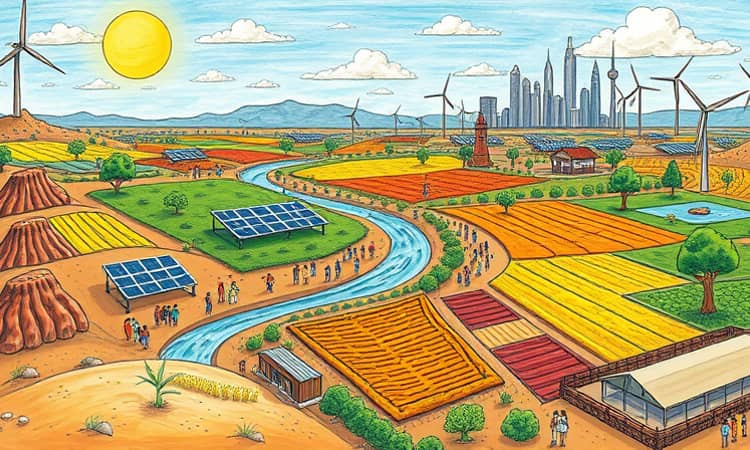
As the world approaches 2030, the pressures of an expanding population, shifting consumption patterns, and environmental degradation have ushered in a period of intense competition for vital resources. In this context, stakeholders from governments to local communities must grapple with insufficient supply of essential natural resources while striving to build resilient systems that can endure future shocks.
Setting the Scene: Global Resource Crunch in 2025
Resource scarcity, defined as the mismatch between supply and demand for water, food, energy, and materials, has taken center stage in global risk assessments. By 2030, the world population is projected to reach 8.5 billion, intensifying growing demand across all resource categories. Domestic material consumption rose by 23.3% between 2015 and 2022, outpacing population growth and signaling unsustainable trajectories.
Meanwhile, projections indicate that global resource extraction could surge by 150% by 2060, with 75% drawn from non-renewable sources. The 2025 Global Risks Report underscores the compound nature of these threats: climate disruption, conflict, and market vulnerabilities converge to exacerbate scarcity and instability.
Water Scarcity
Access to safe water remains a fundamental human right, yet over 2.2 billion people lack reliably managed drinking water services. By 2030, water demand is expected to exceed sustainable supply levels by 40%, placing immense strain on agriculture, industry, and households.
Hotspots such as Pakistan, where per capita water availability has plummeted from 5,000 to under 1,000 cubic meters since 1950, and India’s stressed agricultural states illustrate the severity of the crisis. In many developing regions, 70% of freshwater withdrawals feed irrigation, tightly linking water scarcity to food security.
Moreover, rising transboundary water disputes threatening peace heighten geopolitical tensions, notably along shared river basins in the Middle East and Central Asia. Health impacts are stark: every two minutes a child dies from a water-related disease, underscoring the human toll of this crisis.
Food Insecurity
Food systems have proven vulnerable to climate extremes, conflict, and economic shocks. In the past year alone, 295 million people experienced acute hunger, marking a sixth consecutive increase. Catastrophic hunger in Gaza, Sudan, Yemen, and Mali reflects a confluence of conflict-driven displacement and systemic failures in humanitarian response.
Wasted resources compound the problem: one-third of all food produced is lost or discarded globally. This inefficiency not only contributes to greenhouse gas emissions but also undermines efforts to feed a growing population, particularly the most vulnerable communities.
Energy and Critical Materials
While the world transitions toward renewable energy, existing infrastructure still relies heavily on fossil fuels. Simultaneously, the clean energy shift demands mineral-intensive technologies. Key minerals—lithium, cobalt, rare earths, and copper—are abundant in reserves but concentrated in a handful of countries.
For instance, Australia and Chile dominate lithium production, China leads in refining rare earths, and the Democratic Republic of Congo supplies a majority of cobalt. This geographic concentration creates supply chain vulnerabilities, as evidenced by pandemic disruptions and trade tensions.
Innovation offers hope: emerging technologies like perovskite solar cells and improved battery chemistries could reduce reliance on scarce elements. Yet, only a small fraction of critical materials currently enters recycling streams, highlighting the urgent need for circular economy and recycling advancements.
Environmental Impacts of Extraction
Global domestic material consumption reached 113.6 billion metric tons in 2022, driven by non-metallic minerals, biomass, ores, and fossil fuels. This scale of extraction has profound ecological consequences: land degradation, water pollution, and biodiversity loss are endemic where mining and agricultural expansion occur unchecked.
Despite the clear benefits of closing loops, circular models remain marginal. Waste accumulation continues to grow, and resource-intensive practices persist, undermining long-term sustainability goals.
Drivers of Scarcity
Several interlinked forces propel resource scarcity:
- Population Growth: Urbanization and demographic expansion directly increase demand for all resources.
- Economic Development: Rising incomes spur higher per capita consumption, intensifying material footprints.
- Climate Change: Droughts, floods, and extreme events disrupt water availability and crop yields.
- Technology Shifts: The green energy transition reshapes mineral demand patterns.
- Pollution and Degradation: Contamination of water and soil reduces usable reserves and undermines ecosystem services.
Geopolitical and Security Implications
Competition over resources fuels geopolitical rivalries. Export restrictions on key minerals, water diversions, and land grabs can trigger diplomatic crises or armed conflict. Moreover, displacement driven by resource depletion contributes to humanitarian emergencies, exacerbating migration pressures and social tensions.
Economic volatility also looms large: supply chain shocks ripple through global markets, threatening energy security and industrial output. In this volatile landscape, nations must balance strategic resource reserves with cooperation mechanisms to reduce risk.
Managing Scarcity: Solutions and Strategies
Addressing resource scarcity requires coordinated action across scales, from local to global. Stakeholders must embrace innovation, sound governance, and community engagement to forge resilient pathways.
- Technological Innovation: Deploy advanced irrigation, drought-resilient crops, and water purification systems. Invest in material-efficient manufacturing and next-generation recycling.
- Governance and Policy: Strengthen transboundary water agreements, enforce responsible mining standards, and implement circular economy incentives aligned with UN SDG 12.
- Community Engagement: Empower local stakeholders through participatory resource management and traditional knowledge integration.
- Education and Awareness: Highlight resource interdependencies and promote behavioral change toward sustainable consumption.
Key Data at a Glance
By weaving together robust data, innovative strategies, and inclusive policies, the global community can transform scarcity into an opportunity for cooperation and resilience. Central to this transformation is the recognition that the fates of water, food, energy, and materials are intertwined and demand solutions that span borders and disciplines.
Ultimately, the path forward hinges on our collective resolve to embrace equitable solutions for vulnerable communities and foster a sustainable future in which scarcity no longer defines our shared destiny.