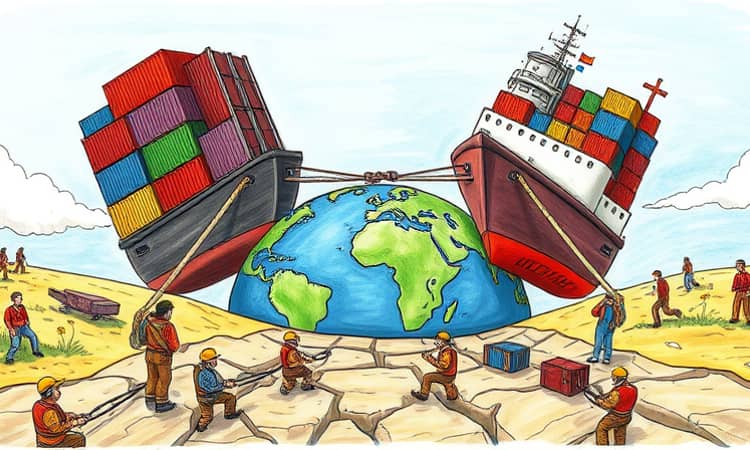
As nations clash over tariffs and trade barriers, global economies and communities feel the reverberations. This analysis unpacks the costs, lessons, and human consequences of modern trade conflicts.
Core Definitions and Historical Context
A trade war involves countries imposing tariffs or other barriers on each other in retaliation. By raising import duties, governments aim to protect domestic industries, but often provoke tit-for-tat tariff escalation that harms everyone.
The classic example is the Smoot-Hawley Tariff Act of 1930, which raised U.S. duties sharply. Instead of shielding American jobs, it deepened the Great Depression as partner nations retaliated, collapsing international commerce.
Today’s disputes echo that era, reminding us that closing borders seldom leads to lasting prosperity.
The US-China Trade War: An Ongoing Showdown
Initiated in January 2018 by the Trump administration, the US-China conflict imposed tariffs on roughly $350 billion of Chinese imports, while Beijing retaliated on $100–110 billion of US goods. Initial duties at 25% escalated to 145% on key products, mirrored by China’s tariffs reaching 125% by mid-2025.
Though a Phase One deal signed in February 2020 aimed to ease tensions, trade volumes never recovered. Exports and imports remain below pre-war levels, illustrating how prolonged global trade wars erode business confidence and supply chain relationships.
Manufacturers report lingering uncertainties, and both sides continue to struggle with incomplete commitments.
Direct Economic Costs
Both major players have incurred substantial losses, with secondary effects rippling across industries.
- Macroeconomic Impact in the US: Real wages down by 1.4% and GDP declines by about 1% by 2028 if tariffs persist.
- By Industry: Manufacturing employment temporarily rose by 2.3%, but will spike downward when protection ends. Services and agriculture lost jobs due to higher input costs and retaliatory duties.
- State-Level Disparities: California, Michigan, and Texas face real income losses exceeding 3%, reflecting exposure to Canada, China, and Mexico.
- Consumer Impact: Average US households pay hundreds of dollars more each year for goods relying on Chinese imports.
China’s economy saw a GDP loss of about 0.5% by 2028, a smaller relative hit due to policy adjustments and market redirection. However, export-driven sectors—especially agriculture and technology—felt deep strains, as growth in Q3 2019 hit its slowest pace in nearly three decades.
International and Global Impact
Third-party nations often absorb collateral damage, losing markets or gaining unexpected opportunities.
- Canada: Real income down by 2% by 2028.
- Mexico: Real income down by 2.7% by 2028.
- Ireland: Real income down by 3% by 2028.
- Beneficiaries: Great Britain and Turkey captured diverted trade flows and improved market access.
The IMF estimated global economic growth fell by 0.8% in 2019 due to the US–China standoff. Projections warn that long-lasting trade conflicts could shave off 0.7 to 1.8 percentage points from world GDP over several years, affecting G-20 growth expected at just 2.4% in 2025–26.
Financial Markets and Business Confidence
Announcements of new tariffs trigger immediate volatility: stock sell-offs, 15% swings in the dollar, and fears of global recession. Corporations delay capital expenditure, hiring freezes spread, and supply chains fray.
- Market Reactions: Sharp sell-offs follow each escalation.
- Investment Delays: Firms postpone major projects amid uncertainty.
- Supply Chain Adaptation: About one-third of companies chose to diversify supply chains or find alternative markets.
These shifts raise costs and complexity, even as businesses seek resilience.
The Mechanisms: How Trade Wars Hurt
Tariff pass-through often means consumers or manufacturers bear most of the cost. A 25% duty on electronics components may raise retail prices nearly one-for-one.
Global value chains, where parts cross borders multiple times, are especially vulnerable. Retaliatory duties on intermediate goods disrupt production, reduce competitiveness, and force expensive reengineering.
Agriculture and manufacturing, reliant on export markets, endure the sharpest contractions when foreign buyers impose counter-tariffs.
Socioeconomic and Political Ramifications
Areas experiencing temporary manufacturing gains later face concentrated unemployment spikes as tariffs sunset. Regions once buoyed by protection quickly revert to distress, and social strains intensify.
Governments often respond with subsidies or farm payments, but such measures only partially offset losses and may distort markets further. The enduring effect is international alliances and economic resilience undermined by mistrust.
Political fallout includes rising protectionist rhetoric, escalating risks of cascading restrictions, and challenges to the authority of the WTO.
Lessons and Outlook
Companies have accelerated moves to diversify, forging new partnerships in Southeast Asia, Latin America, and Africa. While this builds resilience, it also increases operational costs and complexity.
The dynamics of trade diversion and supply chain adaptation show that full retaliation by partners imposes greater short-term costs on the initiator, but may stabilize sectoral employment.
Ultimately, the longer tariffs remain, the greater cumulative impact on GDP and incomes, even as markets adjust. Policy decisions today will set the tone for the next era of global commerce.
Notable Figures and Data Points
These figures highlight that while major economies bear significant burdens, smaller trading nations often experience real income losses exceed those of the principal actors, due to their reliance on export markets.
In conclusion, trade wars inflict deep economic wounds, disrupt lives, and erode the foundations of international cooperation. The path forward lies in dialogue, calibrated policy, and an unwavering commitment to open trade as the engine of shared prosperity.