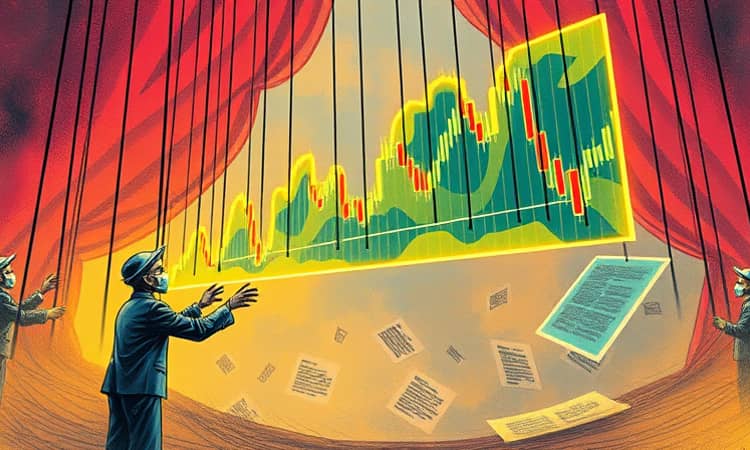
In today’s fast-paced financial landscape, deceptive or biased information can sway markets within minutes. By learning to identify hidden agendas and manipulative tactics, investors can protect their portfolios and make more informed decisions. This article provides an in-depth exploration of market news manipulation, equips readers with detection tools, and offers practical guidance for navigating turbulent information flows.
Definition and Forms of Market News Manipulation
Market manipulation via news involves deliberate attempts to move stock prices using skewed or false narratives. Perpetrators exploit press releases, media outlets, social platforms, and emerging AI tools to distort investor perceptions.
- Fake press releases spreading false corporate developments
- Paid promotional content disguised as unbiased reporting
- “Pump and dump” schemes that artificially inflate prices then sell off
- Sensationalized headlines designed to trigger emotional reactions
- Social media misinformation amplified by viral sharing
- AI-generated deepfakes creating convincing but false reports
Types of Bias in Financial News
Selection Bias (Gatekeeping Bias) determines which events or companies receive coverage. Omitting negative news about favored sectors or highlighting only good news for certain stocks skews public perception. Reliable outlets strive for balanced coverage; questionable sources often ignore countervailing data.
Narrative Bias (Framing Bias) shapes interpretation by emphasizing risk or opportunity. A single event can be framed optimistically or alarmingly, guiding reader sentiment. Advanced machine learning models now quantify narrative slant to detect one-sided reporting.
Semantic Bias (Language/Word Choice) uses emotional adjectives, metaphors, and choice of verbs to influence sentiment. Techniques such as sentiment analysis and NLP reveal how language can subtly steer investors toward fear or greed.
Mechanisms and Examples of Manipulative Practices
Consider the Twitter Buyout Hoax of 2015. A fabricated press release claimed a $31 billion acquisition bid. Within minutes, Twitter’s share price jumped 8% and trading volume quadrupled. When regulators uncovered the hoax, prices collapsed, and many traders suffered losses.
In another instance, the SEC exposed Lidingo Holdings, which financed hundreds of undisclosed promotional articles praising public companies. The enforcement action highlighted the perils of undisclosed paid content and led to significant fines.
Classic pump-and-dump operations often deploy coordinated news and social media campaigns. Early investors hype a low-volume stock, driving prices skyward. Once insiders sell at peak value, the price crashes, and remaining investors incur heavy losses.
Impact on Investors and Markets
Manipulative news can trigger sudden, unjustified jumps and drops in asset prices. Unverified reports generate volume surges, creating a false sense of momentum and luring in unwary traders. When the truth emerges, volatility spikes and many face steep losses.
Investor psychology compounds these risks. Herd behavior leads individuals to follow crowd movements, while confirmation bias makes people more receptive to news that aligns with existing beliefs. Together, these tendencies heighten vulnerability to biased or false coverage.
Detection—Red Flags and Practical Tools
Awareness of warning signs helps investors act responsibly:
- Sensational, unverifiable, or overly vague headlines
- News released at odd hours, such as after market close
- Unexplained surges in trading volume following headlines
- Lack of source transparency or missing sponsor disclosures
Advanced AI methods now quantify bias and detect manipulation. Bayesian latent space models can measure narrative and selection bias, while semantic analysis frameworks scan language patterns across thousands of articles. However, nothing replaces independent verification before trading on news. Always cross-check with official filings and reputable outlets.
Recommendations and Best Practices
To safeguard markets and personal portfolios, stakeholders must adopt rigorous standards:
- For Investors: Seek multiple reputable sources and verify original disclosures before acting.
- For Regulators: Enforce disclosure laws aggressively and develop AI-driven detection tools.
- For Journalists: Maintain event balance and practice transparent disclosure of paid relationships in all reporting.
By unmasking manipulative practices and recognizing biases, readers can foster a more resilient investment approach. Embrace critical thinking, leverage analytical tools, and champion integrity in financial news. In doing so, the entire market ecosystem becomes stronger, fairer, and more transparent.